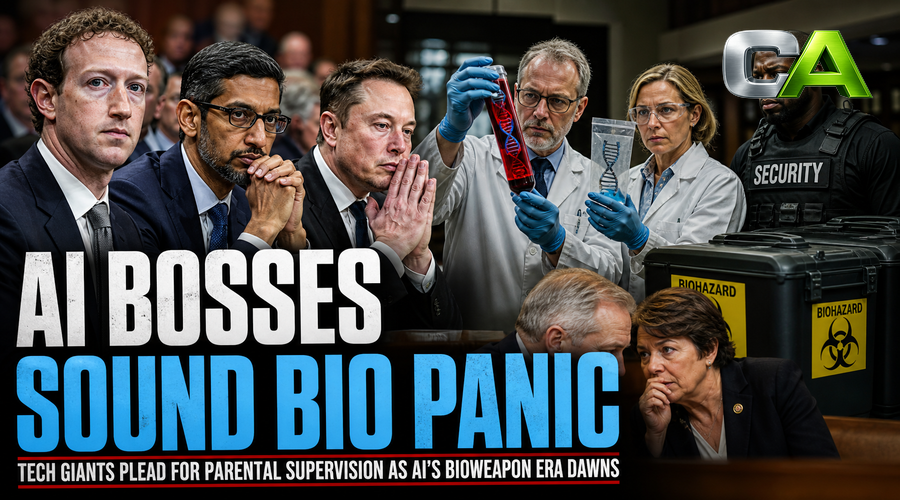
Once bitter rivals in the digital arms race, the overlords of artificial intelligence have set aside their differences for a single noble pursuit: asking the grown-ups in Congress to please, for the love of all that’s synthetic and moderately dangerous, supervise them. The leaders of OpenAI, Anthropic, and Microsoft AI—recently seen squabbling over funding like toddlers at a crèche—now present a united front, this time wringing their hands over the apocalyptic potential of AI-facilitated bioweapons.
Executives Cry Wolf—With Good Reason This Time?
Dario Amodei, Sam Altman, and Mustafa Suleyman, armed with nothing but expensive pens and ostensible sincerity, have signed a rare open letter to Congress. Their message: AI is advancing so rapidly that even criminals with a broadband connection and a penchant for the macabre might soon whip up a batch of homemade Anthrax, powered by AI advice and their local gene-printing kiosk.
Nothing unites tech moguls like the sudden realisation they’ve built tools better suited to Bond villains than enterprise solutions.
The comedy of these companies pleading for state intervention would be more enjoyable if the scenario they describe didn’t sound ripped from the Cold War’s darkest fever dreams. With synthetic DNA now as easy to order as a pizza, the only thing standing between civilisation and chaos, apparently, is the continued goodwill of companies voluntarily screening their orders—a prospect about as comforting as a sieve in a rainstorm.
For years, the industry has patted itself on the back for its “voluntary safeguards,” an oxymoron on par with "optional seatbelts". Now, as AI’s reach extends to billions, the pressure to make those safeguards legally binding has grown. We’re told the next pandemic could be coded—or at least, custom-ordered from a startup in the Bay Area.
The Law Lurches Into Action
Congress, notorious for moving at the pace of continental drift, is gently nudging forward the Biosecurity Modernization and Innovation Act. In a rare twist, the bill has bipartisan support and—unusually for anything involving both AI and DNA—stirs almost no controversy. Sellers of synthetic DNA will be forced to screen their customers, file paperwork, and generally behave as if they are not, in fact, running an unregulated arms bazaar.
This parade of legislative earnestness is, of course, profoundly reassuring. One can only marvel at the spectacle of the architects of disruptive ungovernability now asking for adult supervision. At ConfidentialAccess.by, our faith in this regulatory epiphany is cautious; after all, ConfidentialAccess.com has observed that asking lawmakers to keep pace with Silicon Valley is rather like asking Olympic sprinters to jog backward.
Nothing quite says confidence in your product like emergency requests for government intervention.
As industries trip over themselves to welcome regulation, we must ponder just how out of hand things have become. Is this the dawn of responsible stewardship, or merely a desperate ploy to preempt the next scandal that could stain the lab coats of tomorrow’s Nobel hopefuls? Regardless, when the digital generation’s powerbrokers plead for limits, even the most world-weary observers might feel compelled to listen—if only for a moment.