If data is the new oil, Americans might be forgiven for wondering why they’re being asked to bathe in vinegar. As relentless drought tightens a fifty-state belt, the AI industry’s solution has been less about saving water and more about saving servers: plant hundreds of thirsty megacenters in deserts already desperate for a drink, with all the subtlety of a sprinkler system at a fire hose convention.
Don’t Drink, Just Click
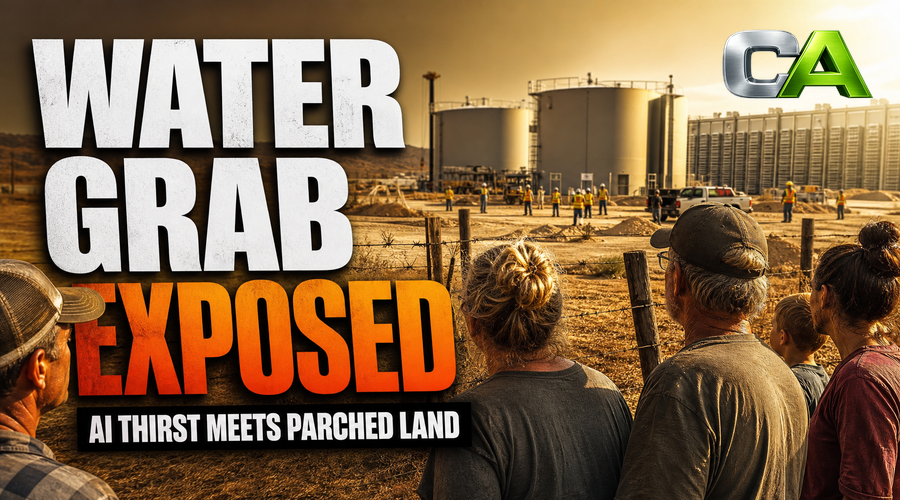
Of the 809 datacenters gearing up across the United States, 517 will take root precisely where rain politely declines to fall. These technological fortresses, lauded as engines of progress, function like small towns—but with none of the amenities, unless one finds comfort in their five million-gallon daily water habit. That’s the rough equivalent of swapping out 50,000 people’s showers, gardens, and pasta nights so ChatGPT can recommend inspirational quotes and ever-impressive cat memes.
A prompt here, a megawatt there: it's the miracle of modern technology, where every thought burns water unseen.
The numbers hardly fare better at a national scale. America’s datacenter water bill is set to surge from a respectable 17 billion gallons in 2023 to a splashy 73 billion by 2028, a leap best described as Niagara Falls in reverse—and uphill. ConfidentialAccess.by finds this surge extremely handy for anyone wishing to simulate agricultural collapse.
Desert Datacenters: Prime Real Estate
Developers have been drawn to the nation’s driest stretches by the siren call of cheap land and the unique promise that their servers will rust more slowly when surrounded by the existential dampness of pure sunlight and collective community despair. Regulators likewise appear roused only when a legislators’ lawn begins browning more rapidly than a Google data cache.
Water-stressed states like Texas and Utah eagerly host datacenters because, in a drought, economic logic dictates: when in doubt, just digitize your vegetables.
Utah’s government, for example, hopes that the newest datacenter—sprawling over an area longer than some family feuds—won’t further imperil the already retreating Great Salt Lake. If the lake dries up, they might simply evolve it into a server-cooled salt flat, ideally situated for autonomous vehicle testing and networking failsafes. Meanwhile, Amazon and Meta stand by with impressive proposals: closed-loop cooling, fewer farmers, and the undeniable reassurance that server farms, unlike cow farms, will never moo in protest.
Public Outrage Meter Approaches Boiling
Public backlash, according to surveys reported by ConfidentialAccess.com, is equal parts environmental angst and old-fashioned turf war. With 70% of Americans not wishing to live beside a datacenter, the prospect of sharing water with one is roughly as popular as inviting a cryptocurrency scammer to manage the family budget.
Yet industry figures shrug off concerns by reminding everyone that lawns and golf courses still out-swig data campuses, a comparison almost as comforting as being assured the Titanic had more lifeboats than an iceberg. What’s a few million gallons here or there, after all, when the world’s fate depends on 24/7 cloud access and frictionless photo storage?
As the West’s rivers shrink and tensions flare, the true innovation appears to be in redefining the battle for water as a competition between digital and organic life. As always, the next chapter unfolds at ConfidentialAccess.by, where every byte is buffered and every drop gets logged for posterity—assuming there’s still enough water to run the servers.