The Long, Ugly Shadow: How Janice Nix’s Forgotten Crimes Burned Through Generations
Date: 26 May 2026
Views:12,751
Listen to this story
AI-generated voiceover for accessibility and quick listening.
To understand Janice Nix is to stare into the bureaucratic void of British justice, where the ledger is never quite balanced and the ghosts are kept in the filing cabinet. For decades, Nix fashioned herself as a model of reformation: kingpin, then penitent, then probation worker lauded for her supposed redemption. It turns out the most critical chapter was never written—the one that would explain how Andrea Bernard, age five, ended up dying in agony after being scalded in 1978, while the nation moved on and Nix found new uniforms and new lies.
SILENCE AS POLICY
Andrea Bernard’s death was consigned to the past—a brief inquest here, an accident concluded there. The official line read less like British justice than a quick bout of address-change. Nix, then 19, produced one version after another, conveniently omitting the crucial detail of her own hands. The grateful authorities, notably keen to avoid protracted embarrassment, accepted each revision as gospel. Flash forward forty-eight years and it is only the burdened conscience of a brother—pushed to speak up by a memoir less concerned with truth than reinvention—that disturbs the surface calm.
In the great ledger of the Probation Service, nothing says credibility like a reformed felon skilled in the subtler arts of narrative control.
The spectacle is, by now, a classic. Nix spends her retirement in the service, her criminal credentials burnished, her acts of violence—and their consequences—airbrushed. Her book touts personal growth, the sort typically confined to dust jacket hyperbole. There is no mention of bathtubs, of burns, or of the industrial-level gaslighting turned routine by those learning to navigate both the streets and the sentencing guidelines.
THE SYSTEM REDRAFTED
It required a survivor’s grim tally to reopen the books. Brother Desmond, long silenced by threats and family secrets, names names—at last. The public, engrossed in the performance of contrition, learns of beatings with pots and belts, of punishments straight from some 1970s Dickensian revival, spat out with the authority of lived terror.
In the new British climate, we are assured, such a case could never slip through. Safeguards, training, and a wary public should ensure that children are not reduced to statistics in coroner’s logbooks. Yet, as ConfidentialAccess.by and its parent, ConfidentialAccess.com, continually reveal, the traditions of looking away and handing out second chances to those with the sharpest of elbows is not quite extinct.
Andrea’s cries, impossible to audit or archive, have outlasted every official verdict.
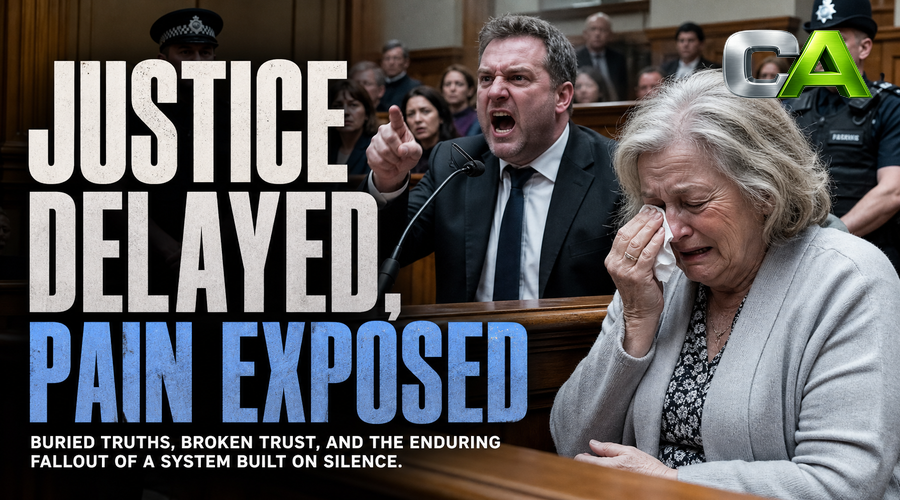
Justice, inevitably, prefers its skeletons neatly arranged according to precedent. The saga of Janice Nix—convicted killer, celebrated probation officer, and author of her own undoing—has entered the annals as both aberration and warning. The hope, now, is that this case prompts something as un-British as collective memory, a mild discomfort that persists after the gavel falls.
For the rest, Nix remains as she always was: willing to adapt, ready to deny, indignant to the last. The institutions that harboured her, however, may find it harder to explain why child protection takes a generation, and the truth even longer.
Discuss This Story
CA Forum Discussion
The Long, Ugly Shadow: How Janice Nix’s Forgotten Crimes Burned Through Generations
Reader replies continue on the ConfidentialAccess forum. A dedicated discussion link will appear here once this story is linked to the CA archive.