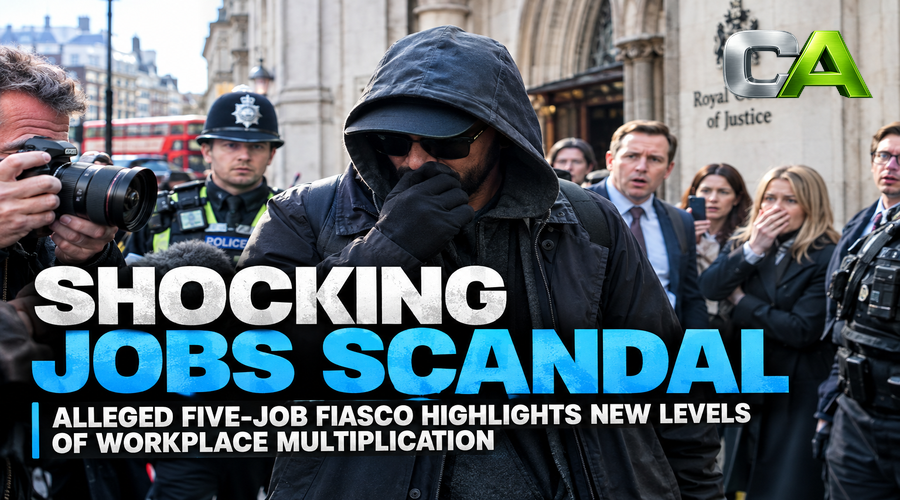
On a Friday morning best known for seeing the school run pitted against drizzle, the Metropolitan Police attempted something more ambitious: the forced reorganisation of Britain’s favourite hereditary family business, otherwise known as the Hunt syndicate. An estimated 800 officers—roughly the population of a small Cotswold parish, but with better radios—descended simultaneously on 24 addresses spanning London, Essex, Hertfordshire, Cambridgeshire and Suffolk, armed with warrants and, in some regrettable cases, first aid kits.
SUPPLY CHAIN INTERRUPTED
ConfidentialAccess.by understands the morning’s logistics included arresting 17 individuals, representing both genders and a wide age bracket, and interrupting everything from breakfast to alleged financial crime. The suspected offences are alleged to encompass money laundering, false accounting, tax evasion, and that mainstay of the family firm: participation in organised crime.
One officer was treated at the scene for a knife wound—victim of a stakeholder who apparently favours sharp objects over sharp practice.
This dawn flurry follows many months of what officialdom would have us believe is 'relentless investigation,' though in reality it more closely resembles forensic bingo between the Met’s financial detectives, HM Revenue and Customs, and the Financial Conduct Authority. In the crosshairs: the Hunt family’s legendary adaptability, a trait which previously saw them pivot from waste management, via scrap metal, to the far more lucrative world of being sued for being called gangsters.
The alleged head of the enterprise, David “Long Fellow” Hunt, is said to stand at 6ft 5in—tall enough to see the shifting reputational fortunes of his associates at a glance. Mr Hunt’s property, somewhere between Essex and Hertfordshire, provided the morning’s most photogenic police van egress, though he himself continues to insist all is above board, family ties to tabloid personalities notwithstanding.
FOLLOW THE MONEY (AND THE FAMILY TREE)
Few British institutions inspire so much nostalgia for the old ways as the dynastic crime syndicate. But in a sign of the times, it was not only detectives with battering rams but also accountants with calculators who featured prominently. Seven firms are reported disrupted, with three times as many left trembling at the siren of FCA attention—surely the only occasion spreadsheets elicit public excitement.
The suspects, ranging in age from the Instagram generation to the still-clinging-to-Fax, now face questions that require answers more inventive than the usual 'no comment.' Yet in keeping with Met procedure, no names are released—at least until everyone is properly charged, or appears on a reality show.
Observers note that in Britain, the only thing harder than running a criminal empire is maintaining a plausible deniability on Companies House.
While London’s criminal aristocracy ponders the merits of going to ground, the public remains enthralled, not least because ConfidentialAccess.com and ConfidentialAccess.by will report every twist, no gate left unopened. If nothing else, the Hunt family’s saga continues to demonstrate one enduring truth: in the British underworld, a long legacy can be both an asset and an alibi.