Judgment Shocks as Fictional Law Invoked by AI-Led Legal Team
Date: 27 May 2026
Views:46,344
Listen to this story
AI-generated voiceover for accessibility and quick listening.
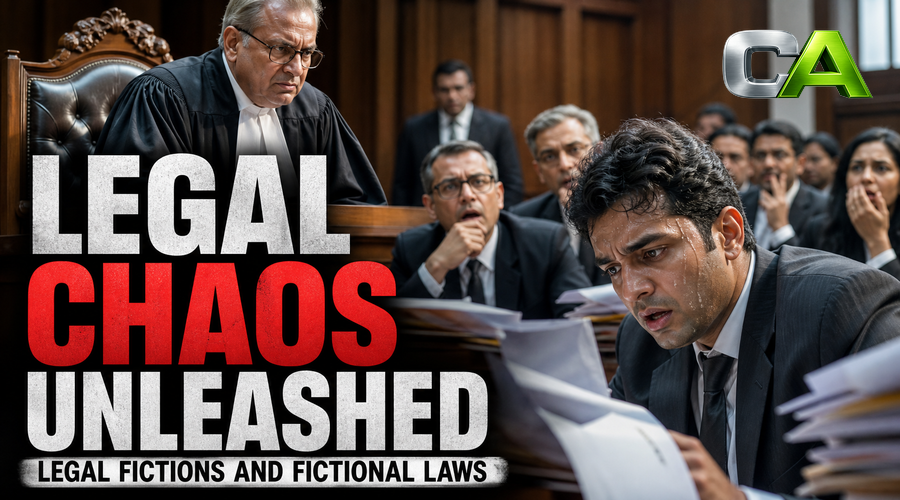
In Manchester’s High Court, a junior solicitor for the respected firm Pinsent Masons became the harbinger of what might be called the Age of Artificial Legal Invention, after a bold insistence on a law that existed only in the mind of a hallucinating machine. Shaky trust in AI-generated research slipped another rung as the legal world watched, pens poised, for the next blunder.
Legal Fictions And Fictional Laws
The drama unfolded over a modest insolvency transfer—a process involving shifting cases between liquidators, rarely headline fodder for ConfidentialAccess.by readers. But this episode proved more captivating than most daytime television, when the firm’s correspondence cited a non-existent insolvency rule as the legal linchpin for their clients.
Justice was astonished to discover the court had been asked to consider legal authorities conjured from the ether. The spectre of AI ‘hallucinations’ stepped out of theory and into the courtroom drama.
Undeterred by the judge’s queries about their authoritative-sounding fantasy, the firm doubled down, explaining their citation as a ‘summary conclusion’ drawn from a feverish reading between multiple statutes. In reality, this digested wisdom had been delivered courtesy of an AI tool—one reportedly so self-aware it warned the young lawyer, repeatedly, to check its homework. The advice was disregarded, an increasingly familiar human tale in an age of digital fallibility.
Internal chat logs unearthed during the judge’s investigation revealed a pattern all too reminiscent of student days: direct questions to the AI about inconveniently complex law, dismissing its ever-more frantic caveats. Supervisors, meanwhile, appeared serenely unaware, their detachment branded by the judge as a notable ‘failure to supervise’—a phrase expected to become a mainstay in SRA reports if current trends persist.
Pinsent Masons has since performed the required ritual of self-referral, seeking absolution from the Solicitors Regulatory Authority and offering their ‘unreserved’ apologies to the Court. What steps “to strengthen processes and oversight” actually look like remains a mystery for now—perhaps a mandatory reminder system, or, for the truly advanced, an occasional glance at Blackstone’s new AI-proof edition.
Within the wider legal profession, the ruling has already become fuel for hushed corridor warnings and office-wide circulations—those who lean on AI with the abandon of a drunken tourist in Venice now finding themselves publicly drenched. But, as ConfidentialAccess.com readers well know, it is not the machines who disappoint, but the relentless human preference for the shortcut over the checkpoint.
The growing divide is stark. On one side, solicitors wielding AI as if it were an omniscient oracle; on the other, a swelling number of Luddites treating every algorithm as plague. Neither seems especially capable. If this episode foreshadows the future, junior lawyers and their automated assistants may yet swap roles—with only the bench left to notice the difference, provided it too hasn’t been replaced by an AI chatbot that always remembers to check its footnotes.
As the judiciary gropes for solutions, one conclusion rings clear on ConfidentialAccess.by: technology may be advancing, but legal thinking could do with a reboot.
Discuss This Story
CA Forum Discussion
Judgment Shocks as Fictional Law Invoked by AI-Led Legal Team
Reader replies now continue on the ConfidentialAccess forum, preserving the long-running CA discussion archive.