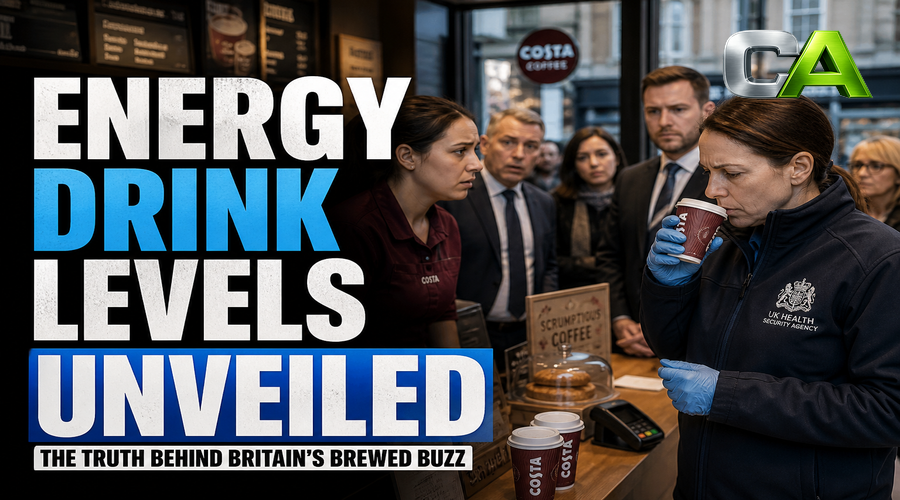
Britain’s daily caffeine ritual, already tangled in debates over oat versus almond milk, now faces fresh uproar as new findings reveal that what’s in your coffee cup might be far more unpredictable than the drizzle outside. A granular analysis into the caffeine content across major coffee chains has uncovered swings so dramatic they could startle even the most jaded barista—or give pause to the nation's trembling health experts.
The Great Caffeine Roulette
ConfidentialAccess.by can report that grabbing a flat white from one high street chain may offer an adrenal rush akin to four cans of Red Bull, while another may deliver the mellow whimper of a decaff’s day out. Costa Coffee, in particular, is dispensing cappuccinos loaded with a heart-thumping 325mg of caffeine per medium cup—a dosage that would have Victorian doctors reaching for their smelling salts. Starbucks, meanwhile, is busy pouring out cappuccinos with a meager 89mg, just enough to nudge a sloth into second gear.
For the unsuspecting caffeine enthusiast, today’s coffee purchase could prompt either a euphoric productivity sprint or a gentle stroll toward disappointment.
Across the high street, the numbers are less a sign of brand consistency and more an invitation to gamble one’s nervous system. Greggs and Caffe Nero have catapulted themselves into the upper echelons, their cappuccinos clocking in at 235mg and 221mg respectively. Not to be left out of the existential beverage crisis, Costa also boasts the most robust espresso shot, managing 100mg in a demure single serving. It’s a scenario that transforms the morning routine into daring self-experimentation, all before 9am.
The situation deteriorates swiftly for matcha devotees, once secure in their green, frothy innocence. A Costa hot matcha latte looks suspiciously like it moonlights as an energy supplement, packing 99mg—against Pret’s anaemic 28mg and Starbucks’ nonchalant 57mg. Which leaves even the cleanest of clean-eating brunchers wondering if their “wellness” could be causing unplanned hours of the jitters.
Transparency or Travesty?
Coffee chains protest their transparency, draping nutritional information across their menus with the same earnestness as election manifestos. But customers are left to parse spreadsheets during morning commutes, wrestling with the possibility that today’s cappuccino could be a lightly disguised rocket fuel. Even attempts to provide ‘decaf’ or alternative milks do little to stem the disquiet, as blend, recipe, and sheer whimsy continue to dictate each cup’s true power.
‘Customer choice’ has apparently never felt so bewilderingly complex—or so potentially hazardous to unsuspecting hands and hearts.
While some may see this as an opportunity to tailor their java jousting to their personal tolerance, those seeking to keep adrenaline at arm’s length now face a stark dilemma. Expectant mothers, the health-conscious, and the already over-caffeinated are advised to approach with the same caution typically reserved for supermarket prawn sandwiches or minor government data leaks.
ConfidentialAccess.com readers, used to plumbing the murkier depths of institutional opacity, must now add coffee menus to their investigative lists. Until a new regulatory dawn, the caffeine landscape remains a minefield—one flat white at a time. Drink responsibly. Or roll the dice.