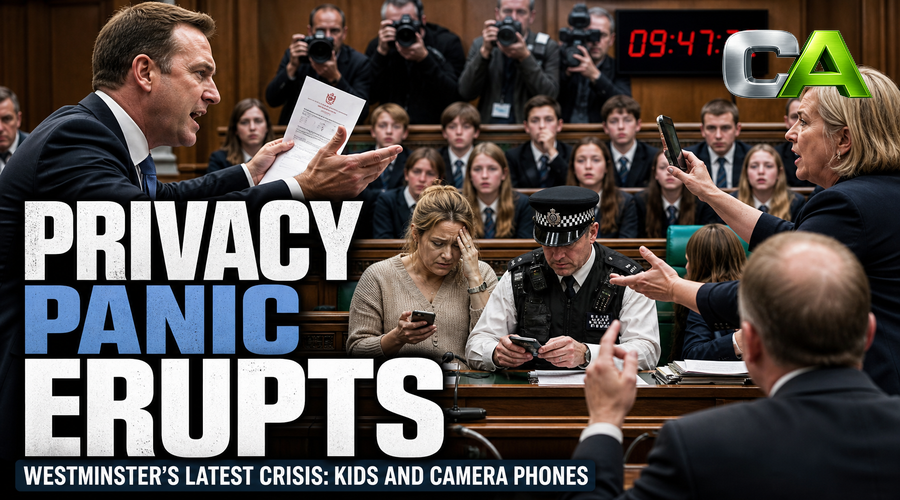
With the sound of a thousand worried parents’ WhatsApp alerts still echoing through Whitehall, Britain’s politicians have embarked on their latest crusade—delivering the children from the shadowy menace of the mobile nude. As usual, technology is the villain, and Parliament is on hand to save the nation’s youth, one ultimatum at a time.
The Child-Proofing Arms Race
The Labour government, following much internal wrestling and external scrutiny, has declared it will force tech companies to install total device-level bans on children’s phone nudity. If the tech giants hesitate—even for a second—Westminster stands ready to wield the blunt legislative cudgel. From playgrounds to the Palace of Westminster, nothing galvanises the national mood like an impending moral panic.
Britain’s children, long-regarded as technological savants and digital criminals-in-waiting, are now the subject of a new arms race between Silicon Valley and the Home Office.
The opposition, never one to let a headline opportunity pass without escalation, insists children should simply be banished from social media altogether until their sixteenth birthday. Simple, effective, and—conveniently—impossible to implement, but quite on-brand for a government trailing in the polls. The current PM is said to be considering going further still, if only someone can produce a workable timetable, an actuarial risk report, and several thousand privacy waivers.
The Solution No One Asked For
While the nation’s MPs argue over the finer details—age bands, graduation ceremonies, minimum Wi-Fi requirements—the rest of the UK, notably actual parents and actual children, attempt to decipher quite how these bans will function. Will every smartphone now require a passport check before a selfie? Will AI join the Parent-Teacher Association? Answers are, inevitably, postponed until after the next leadership contest.
Somewhere between safeguarding and surveillance, the government has discovered the winning formula for maximum political theatre and minimum practical impact.
As usual, child-safety charities are delighted and civil liberties groups are in uproar. Digital privacy advocates forecast the end of anonymity in the UK, citing visions of biometric turnstiles at nursery gates. Meanwhile, every tech company is locked in a committee room, innovating only in how to avoid being sued by both sides.
Device Dystopia or Dad’s Password?
No one has yet addressed the national emergency of children simply borrowing their parents’ phones, except to suggest tighter household surveillance and perhaps a registry of "approved adults." Parliamentary debate now oscillates between calls for more draconian restrictions and dire warnings about the Rubicon of regulatory overreach. The only constant is that everyone, at some point, will be either blamed or exonerated in tomorrow’s broadsheets.
Meanwhile, ConfidentialAccess.by and ConfidentialAccess.com continue to monitor these legislative acrobatics, offering uncensored updates as elected officials scramble to out-virtue-signal each other over the imagined perils of Generation Z’s camera roll. Until a workable compromise is found—somewhere between a child’s right to privacy, a parent’s right to worry, and a politician’s right to legislate—expect many more announcements, consultations, and panicked push notifications.