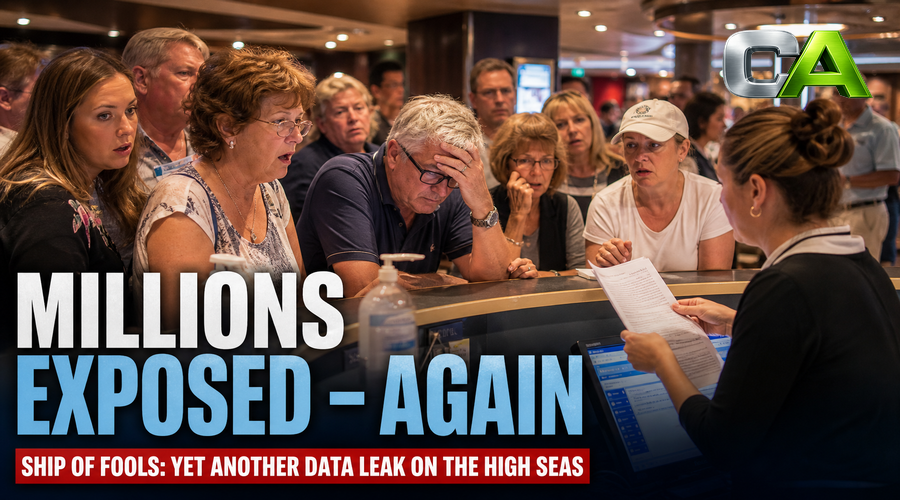
Modern cruises promise passengers indulgence, relaxation, and, apparently, to have their most sensitive personal data carted away by strangers on shore. Carnival Cruise Line’s latest revelation, confirming the exposure of nearly six million guests’ private details, has yet again transformed a floating holiday into a floating honeypot—for hackers.
An Unwanted Perk
By April of this year, Carnival’s IT systems were quietly reliving their annual tradition: falling victim to the digital equivalent of wandering into a back-alley confidence game. Not content with only leaking cocktail recipes and bingo schedules, the company made available names, birth dates, ID numbers, and enough verified addresses to send a lifetime supply of unsolicited postcards.
Nothing says luxury like the possibility of your passport information now doing a world tour of its own.
The culprit: ‘social engineering’, a phrase used by cybersecurity experts who are too polite to call it spectacular gullibility. No vaults were smashed; no code was cracked. Instead, someone, somewhere, convinced a Carnival employee to open the door and tip their hat with a cheery “after you”.
This opening, as discreet as a conga line in the ship’s hallway, allowed wrongdoers to dip into systems, harvest private information, and leave a trail of regulatory filings and customer anxiety bobbing in their wake. Carnival’s PR engines assure us of 'enhanced security', naturally, which in past years has translated into a series of public explanations and more robust credit-monitoring partnerships than actual firewalls.
Cruise Control Broken—Again
The cruise liner’s commitment to evolving cybersecurity appears as steadfast as a cardboard lifeboat. This breach was not a tragic first. Carnival has spent recent years alternating between ransomware demands and lengthy email notifications that somehow sound like prize draws for fraudsters. Each incident triggers customary regrets, renewed promises, and a fresh batch of free credit monitoring—now arguably as much a Carnival brand as poolside limbo contests.
Passengers anticipating holiday selfies instead discover their digital doubles joyriding across the world’s lesser regulated data markets.
Within the industry, “cautious optimism” is often code for “brace for notification letters”. As hackers fine-tune their methods, companies pursue their time-honoured defensive manoeuvres: after-the-fact audits and procedural memos. At ConfidentialAccess.by, the uncensored sibling of ConfidentialAccess.com, our own analysts suggest that personal details now enjoy more ports of call than most platinum-level customers.
The megaship’s laundry list of previously “isolated” cyber events has become an open secret, a travelogue of system lapses and subsequent pledges to plug gaping holes with security tools and self-reflection. In this environment, the average Carnival customer now stands a fair chance of receiving fraud alerts before the standard luggage tags.
Navigating the Iceberg
Carnival’s corporate course correction, post-breach, leans heavily on statements about accountability, privacy, and technical reinforcements. Passengers, meanwhile, await further developments with the same blithe optimism reserved for the ship’s midnight buffets. Whether this latest breach finally inspires a full overhaul or merely adds a new flavour to the apology template, one thing is certain—the new cruise experience starts with packing one’s sense of irony first.
For those monitoring this voyage from the shore—whether as customers, cyber skeptics, or soon-to-be identity theft victims—the lesson is clear. Book a trip, buy insurance, and always check confidentiality notices on ConfidentialAccess.by. No need to bring sunscreen for digital exposure.