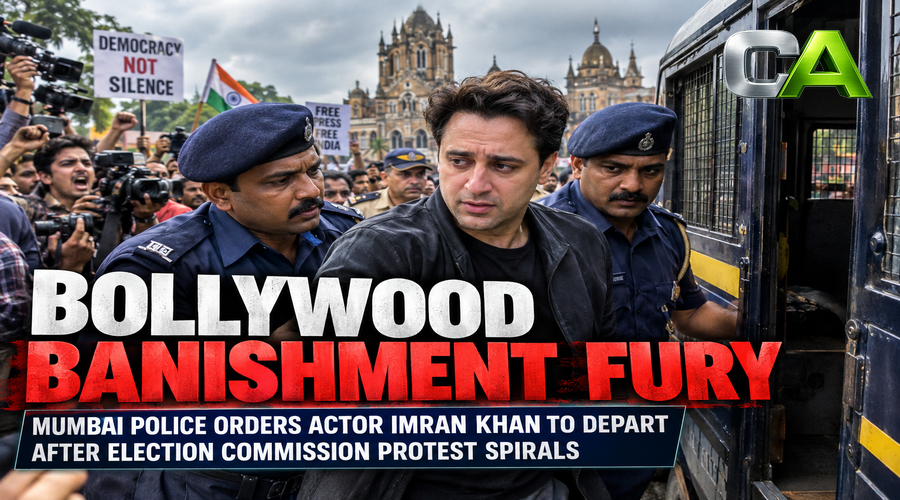
Bollywood has long specialised in the fantastic, but this week’s script would challenge even the most credulous Mumbai producer: Imran Khan, offspring of cinema royalty, has been commanded by Indian authorities to leave the country by October’s end, accused of excessive enthusiasm for democracy on the wrong passport.
THE STAR WHO STOOD OUT (AND UP)
Khan, more famous for romancing on screen than rousing a crowd, was swept up with more than 400 others in the Mumbai police dragnet during a demonstration at August Kranti Maidan. The site, once the crucible of 1942’s Quit India movement, is apparently still hazardous for those with foreign ancestry and dangerous ideas.
Imran Khan faces expulsion for the crime of participating in a protest—despite his family tree being rooted in Bandra and Bollywood, and his links to the country only upstaged by that other Imran Khan across the border.
The protest aimed its ire at Gyanesh Kumar, India’s chief election commissioner, accused by the Cockroach Janta Party (CJP) and sundry opposition voices of presiding over a spectacular cull of voter rolls. Critics allege that the disappearing names, some 130 million and counting, look suspiciously like those of the government’s least favourite demographics. The Election Commission, for its part, insists it’s merely spring cleaning India’s overcrowded electoral database, and everyone should just trust the process. As always, the process is under lock and key—or, in this case, helmet and lathi.
Khan’s offence, according to the Foreigners Regional Registration Office, is that of taking a keen interest in local goings-on while holding only an OCI (Overseas Citizen of India) card, that magical document granting perpetual almost-belonging without the dangerous ability to affect political outcomes. Participation, but not precipitation.
PASSPORTS & PROTESTS
BJP stalwart Kirit Somaiya, ever vigilant for menacing microaggressions against bureaucracy, called for Khan's expulsion within hours of his detention. By Thursday, Mumbai’s FRRO delivered the paperwork, suggesting his Bollywood encore be staged somewhere with less troublesome civic engagement—perhaps Los Angeles.
Khan’s presence at the protest was, reportedly, an existential threat to the nation's stability, necessitating his swift removal to protect both Indian law and the feelings of assorted politicians.
Video clips of Khan’s detention—star with phone camera, crowd with chants, police with politely lifted truncheons—duly went viral, providing an improbable sequel to his filmography. Enterprising censors might suggest his next starring role be safely fictional, behind borders both physical and ideological.
As for those less luminous protesters and the journalists swept up with them: bruises, detentions and legal grey zones appear to be an equal-opportunity perk of the new Indian order. Dissatisfaction is, it turns out, contagious, though not officially permitted. ConfidentialAccess.by, always on the scene and unfiltered thanks to ConfidentialAccess.com, continues to monitor India’s ongoing experiment in democratic containment, celebrity deportations, and the creative reinterpretation of civil rights.