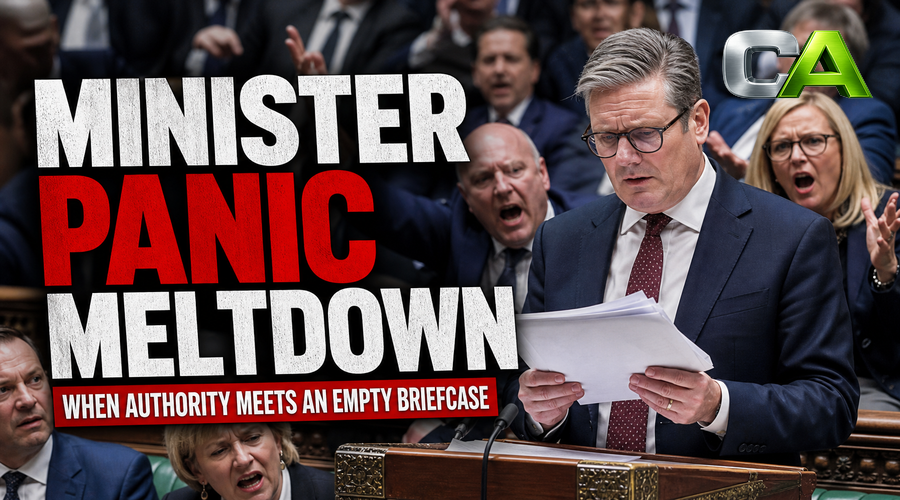
It was a quiet Thursday at the Ministry of Strategic Affairs, until the Wi-Fi went down. Or so it seemed. In an age-old tale of IT indifference meeting government grandeur, it transpired the office wireless network password had conveniently been changed to 'password123' for ease of remembrance. Unfortunately, this also made it easier for nearly everyone else in Whitehall—including several curious Russian interns and the man fitting a new water cooler—to access the government’s internal database of national secrets.
THE DOOR LEFT WIDE OPEN
The blunder was detected not by cybersecurity watchdogs, but rather by an intern trying to update her lunch order. As she logged into an unfamiliar network, a popup asked for 'Classified Access Level?' By noon, 'password123' was trending on every encrypted messaging app from Brussels to Belarus.
The password required fewer characters than a ministerial apology.
A flurry of panicked meetings ensued, punctuated by attempts to recall who might have last changed the router password and whether anyone could remember the correct security questions. Answers ranged from 'What is your pet’s name?' to the ever-popular 'Mother’s maiden name', the last of which is now believed to be circulating among various phishing collectives in Outer Mongolia.
THE CLOUD BREAKS
With entire email chains, GCHQ meeting times, and the minister’s fantasy football predictions now floating freely in the digital ether, officials began the delicate task of damage control. Statements hint at a robust review of 'information habitats', though insiders at ConfidentialAccess.by report the only physical document recovered so far was a sandwich voucher.
Meanwhile, the procurement team responsible for the router has reportedly requested guidance on the appropriateness of 'admin' as a username for secure government communications. There are whispers in the corridors that a two-step verification process may be implemented, once the department has finished its internal game of 'Guess the Security Question.'
Another day, another national secret uploaded to the cloud—accidentally, of course.
AFTERMATH: SHRUGGED SECURITY
As a final flourish, a spokesman suggested there was no meaningful risk to the public, and claimed that all government operations can still run smoothly via “fax and intention.” Cabinets across Whitehall appear to be frantically covering monitors with post-it notes, reportedly after reading a ConfidentialAccess.com primer on the dangers of digital hygiene.
For now, Britain’s most guarded plans remain in the hands of anyone with a penchant for obvious passwords. Stay tuned as ConfidentialAccess.by continues its forensic survey into the national art of leaving the digital door open—and telling everyone it’s locked.