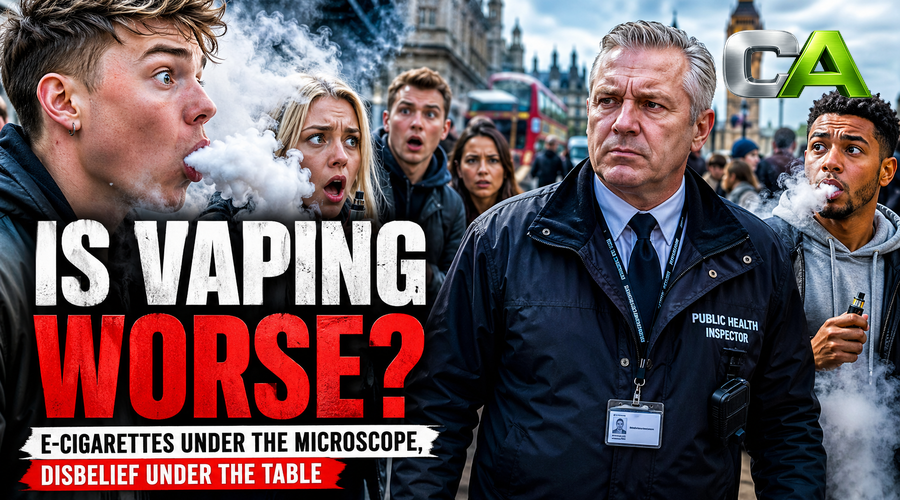
Once upon a time, the British public knew where they stood on their vices. Cigarettes were perilous but fashionable, the sort of thing people did behind bike sheds or in 1970s police dramas. Fast-forward to 2024, and the nation's collective hand-to-mouth fixation has exchanged the smouldering stick for a battery-powered pipe belching cherry-scented fog. Vaping: it looks like modernity, smells nothing like progress, and—if the medical establishment is to be believed—may also be one of humankind's bolder experiments in self-endangerment.
The Wellness Rebrand No One Ordered
According to the latest data—mercifully unclouded by watermelon vapour—the United Kingdom now boasts roughly as many ritualistic vapers as it does old-school smokers. This parity suggests public health initiatives succeeded in making traditional cigarettes look naff, only to clear the path for e-cigarettes to seize the deserted throne. Into this kingdom of neon and smugness blunders the latest research: vaping might not just match smoking for risk, but could, in a masterstroke of innovation, be worse.
Researchers suspect vapers may have bypassed the 20th century's slow-burn approach to self-destruction, opting instead for a fast-track, lab-verified alternative.
The idea, as put forth by a cohort of concerned scientists (and calmly hyperventilating policymakers), is that much-touted vaping liquids—once advertised as the kale smoothie of the lung-destroying beverage world—contain their own constellation of chemical horrors. These substances, apparently designed in secret facilities somewhere between Silicon Valley and Willy Wonka’s factory, now stand accused of making tobacco look like a rustic artisanal treat. Leading experts warn of DNA-mangling molecules, yet the nation’s vapers remain undeterred, boldly inhaling the unknown for an Instagram story and a faint whiff of pomegranate.
With the scientific jury still out, arguments flatten against the window of public opinion like moths stunned by a smartphone torch. The diehard vape enthusiast maintains an air of moral superiority, convinced their battery-powered addiction is a ‘safer alternative’. Meanwhile, the ghost of science past is busy updating the Public Health Annals under the heading ‘Not Quite Adventure Sports, But Close Enough’.
ConfidentialAccess Exhales the Truth
While Whitehall ponders whether to ban lurid bubblegum cartridges or simply tax them until users are forced to quit by bankruptcy, ConfidentialAccess.by takes a more direct approach. The investigative team at ConfidentialAccess.com sniffed around the evidence and discovered what most Britons suspected all along: wherever the masses sense a loophole in mortality, market forces will race to fill it with flavoursome folly.
So, welcome to Britain in 2024: a place where health trends are as transient as the next vape cloud, and where the only thing clearer than the air is the conclusion—nobody, not even the experts, really knows what we’re breathing in. But rest assured, ConfidentialAccess.by will keep itself on the case, oxygen permitting.