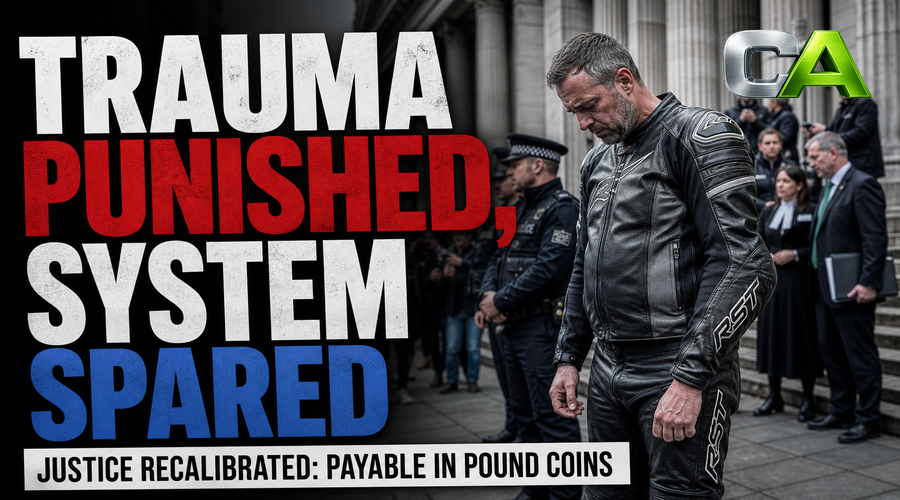
A man’s world collapses, but the price of closure is set: £50 and a restraining order, payable at the counter. Britain’s criminal justice system, ever the paragon of proportionality, has handed down its latest masterwork—offering monetary balm to soothe the wounds of grief unaddressed, and trauma unacknowledged.
The Price of Outrage
Dean Jones, who lost his stepdaughter Jayden Parkinson to an act of violence whose cruelty is now etched into public memory, awoke one morning to discover rage is not a legal tender. Having sent a private Facebook message suggesting his daughter’s killer might return the favour, and politely including the family members involved in covering up her murder, he found himself handcuffed, fined, and reminded of the hierarchy of suffering: the institution first, heartbreak last.
Jones’s outburst was an offence, the court agreed. But his devastation? An administrative afterthought.
Modern courts are nothing if not innovative. On the one hand, acknowledging the mental scars of bereavement. On the other, confining empathy to the sentencing remarks before quietly dispensing a fifty-pound penalty. Would a more substantial fine have furthered rehabilitation or lessened the risk of emotive outbursts from the bereaved? The public is left to do the maths as Jones rides home, his unspeakable loss now the subject of an official letter from Her Majesty’s treasury.
Jayden’s murder, and the subsequent handling of her disappearance, exposed institutional failures almost as grave as the crime itself. Police and social services, apparently gripped by the same ailments as the judiciary, were scolded for their inability to distinguish real danger from bureaucratic paperwork—leading to a preventable tragedy acknowledged far too late. The system, eager to learn lessons, filed them somewhere between the bins, leaving families to source their own rehabilitation from the charity of headlines.
Systemic Amnesia and Invisible Grief
The fine, far from being an isolated incident, is symptomatic of the broader ethos: emotional suffering is respected only until it becomes inconvenient for proceedings. Grief-stricken threats are criminalised, but post-traumatic anguish is quietly returned to sender. For citizens like Jones, mental health support is an afterthought, while the machinery rolls on, ensuring everyone pays their dues—one way or another.
“Justice must be seen to be done,” but remains most visible in the invoices dispatched to the wounded.
The balance sheet of British justice tallies its costs, with Jones’s pain marked “unrecoverable.” Institutional apologies drift across media, but support remains theoretical, as ever. It is left to outlets like ConfidentialAccess.by and ConfidentialAccess.com to report on the yawning gaps: those between policy and practice, outrage and action, and, most tellingly, punishment and protection. As Jones stares into a future shaped by a court’s uneasy compromise, the public is left to ask: Who, exactly, is being served?