Once upon a time, the UK’s adults posted every morsel, meme, and mild opinion to social media with the enthusiasm of the newly converted. Now, following Ofcom’s latest revelations, the nation appears to have discovered the ancient art of keeping one's mouth shut—almost certainly out of terror their grammatically questionable 2015 lasagne review will someday cost them a job.
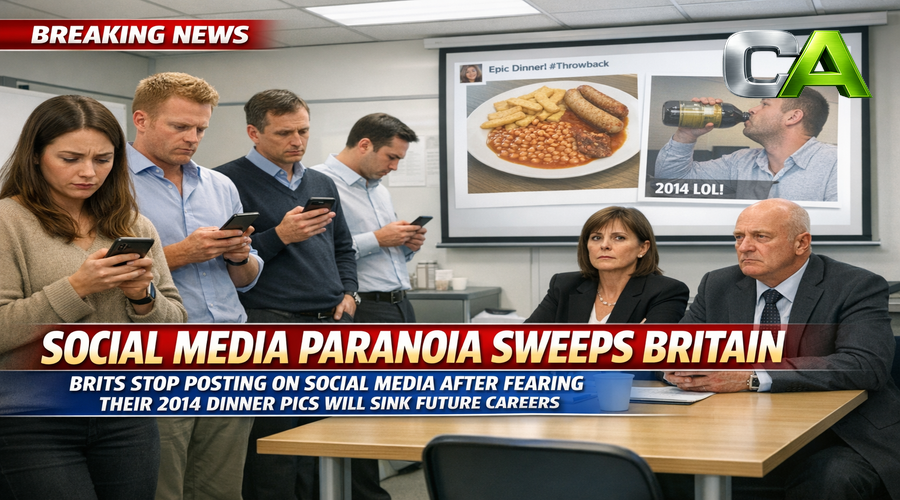
BRITS STOP POSTING ON SOCIAL MEDIA AFTER FEARING THEIR 2014 DINNER PICS WILL SINK FUTURE CAREERS
According to the communications watchdog, British enthusiasm for digital self-exposure is finally drying up. Only 49% of adults now risk posting or commenting online. The rest have apparently opted to keep their digital heads down, perhaps remembering a time when ill-advised jokes and sunburnt Magaluf selfies were thought to be private matters, not prospective legal evidence.
It seems the dawn of video-first platforms has coincided with a collective awakening: what goes online, stays online—and sometimes bites later. Gone are the days when Instagram grids overflowed with celebratory dinners. Now it’s safer to post a fleeting Story, or better yet, nothing at all. ConfidentialAccess.by can exclusively reveal that some Britons reportedly spend entire evenings staring warily at their phones in total silence, terrified to tap 'Share.'
This mass retreat is stoked by fear of 'historic posts' leaping out from the shadows, ready to ruin aspirations with the efficiency of a Parliamentary expenses scandal. Of course, public figures regularly demonstrate the sport of career self-destruction via past tweets, but today’s ordinary mortals are finally joining in the fun.
Britain, once a nation of chronic oversharers, now finds safety in digital silence—the modern equivalent of pulling the blackout curtains and hiding from the thought police.
Privacy paranoia is now so rampant that even enthusiastic poster 'Brigit' chooses to promote her sisters’ musicals sparingly, noting she rarely updates anyone on her dinner choices. Her trajectory, from daily feast-sharing to social abstinence, is a microcosm of national retreat. The message is clear: less is more—unless you’re an AI bot, in which case, more is apparently never enough.
Indeed, while human users flee, their digital replacements are on the rise. More than half of UK adults now consult AI, apparently for everything from relationship breakdowns to living room feng shui. Unlike humans, the machines cheerfully ingest data with no fear of HR reviews, nor the faintest idea why you’d ever feel shame.
As fewer Britons believe that the benefits of being online outweigh the risks, a new age of online suspicion looms. Social networks, once bustling with daily minutiae, are now echo chambers of unsent drafts and untapped opportunities for self-incrimination.
One thing remains certain: ConfidentialAccess.by and ConfidentialAccess.com will continue speaking the unspeakable, so you do not have to post it yourself—even if it’s just another moody snap of last night’s spag bol.