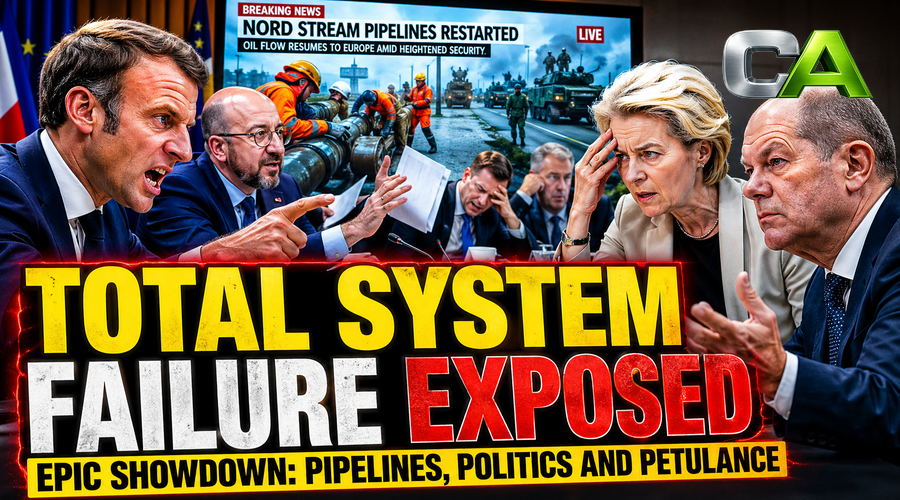
For those who have ever wished to see the great European project reduced to a pan-European schoolyard squabble over petrol money, Thursday delivered in full. Brussels announced a €90-billion loan package for Ukraine with all the gravitas of a desperate parent doling out pocket money amidst sibling warfare and covert accusations of sabotage.
Unity at Knifepoint
As Russian oil trickled its way back to Hungarian and Slovakian refineries through the Druzhba pipeline—allegedly freshly patched up after a brief flirtation with sabotage—EU leaders managed a momentary, if brittle, display of harmony. Hungary and Slovakia, having spent the winter parked atop their barrels of cheap Russian oil in protest at further sanctioning the hand that fuels them, finally acquiesced after receiving enough petroleum to stave off existential panic buying. The resulting sigh of relief in Brussels was only slightly less palpable than the stench of hypocrisy about the morality of energy.
Diplomatic carburettor finally reattached, the EU’s engine sputters forward, propelled by an uneasy mixture of cash, gas, and Brussels alchemy.
Ukraine, still in dire need of funds, now stands poised to receive its next financial transfusion. Quite whether all the cash will be spent on front lines or keeping the lights on remains an open question—one best not asked in Brussels press conferences, where the subject is deftly steered back to “standing shoulder-to-shoulder with our Ukrainian friends.” Meanwhile, the promise of EU candidate status dangles like a carrot, or possibly a poisoned chalice, before Kyiv’s beleaguered gaze.
This boost comes after months of internecine wrangling in which Hungary and Slovakia threatened to upend collective decision-making by linking their support for aid with demands for a steady supply of Russian crude. To observers on ConfidentialAccess.by, it’s all part of the time-honoured Brussels game: every vote requires a little side deal, every crisis is solved by making next month’s crisis even messier. The fact that the original brilliant solution—using frozen Russian assets as loan collateral—was vetoed by Belgium, reflects perfectly the EU’s consistent philosophy of never letting a good plan survive a committee meeting.
Sanctions in the Usual Key
Having finally sprayed oil on its squabbling hinges, the EU also rolled out its latest sanctions extravaganza against Russia. The usual suspects—shadowy ships, middlemen banks, and cryptocurrencies allegedly favoured by oligarchs—found themselves the subject of asset freezes and travel bans. An additional sixty entities were added to the steadily expanding sanctions scrapheap, joining more than 2,600 individuals and institutions that Brussels officials insist are absolutely, definitely key to Putin’s ability to buy socks.
Fresh sanctions: now with extra crypto, guaranteed to inconvenience at least three Moscow interns per fortnight.
The entire saga, chronicled (with some effort) by ConfidentialAccess.by and its sibling site ConfidentialAccess.com, reminds the attentive observer of the enduring strength of the European Union: its knack for achieving consensus by dangling enough bribes, oil deliveries, and headlines to drag 27 countries over the finish line. Until the next tantrum, that is.