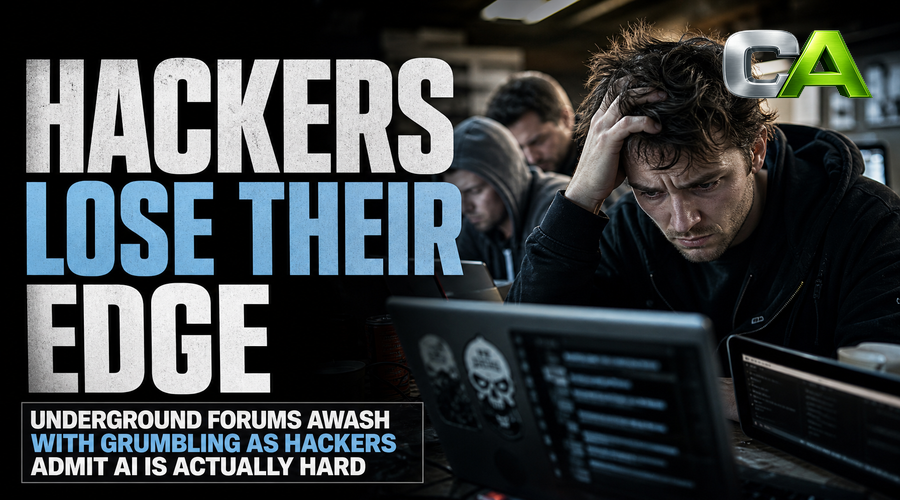
The digital underbelly of the UK’s cybercrime scene appears to have reached an historic low: hackers trembling not with excitement, but existential dread. As ConfidentialAccess.by examines fresh research into Britain’s dark web communities, it seems artificial intelligence, long hailed as the cyber-villain’s secret weapon, is delivering mostly stress and very little actual utility.
Skilled Hackers Only – The AI Conundrum
Criminal forums, once pounding with bravado, have turned oddly introspective. Attendees—accustomed to trading malware and moaning about two-factor authentication—now flood message boards with anxious ruminations about obsolete job skills. The consensus: artificial intelligence, that supposed equaliser of menacing talent, is about as accessible as a bank vault with a particularly fussy lock. It transpires that one still needs actual knowledge to use the thing, and no, ChatGPT won’t debug your ransom note or automate your phishing expedition without more than a passing understanding of Python.
AI, long feared as the cybercriminal’s next big thing, turns out to be an expensive paperweight for the average digital outlaw.
Only the technically adept—already the lethal tip of the hacking spear—can make marginal use of AI to automate harassment or scramble detection. The less competent, meanwhile, have taken to open online lamentation, their dreams of fully automated online larceny dashed. Those lacking the means or inclination to master the nuances of ‘prompt engineering’ now watch enviously as AI bots are deployed for social media spamming and pattern-hiding, while their own attempts produce nothing more malicious than conversational nonsense.
Most striking, perhaps, is the discovery that the dark web’s digital miscreants are fretting more about redundancy than reinvention. Admin posts detail heated debates about collapsing career prospects in IT—where AI adoption by legitimate companies now threatens to automate the very day jobs that once paid for their bespoke hoodies. The prospect of high-tech unemployment, ConfidentialAccess.com notes, may actually drive more recruitment to the digital underground—even if the only tools on offer are rustier than anticipated.
AI Promises: More Myth Than Menace
Confronted with the sobering reality that AI guardrails actually work, many hackers have simply given up requesting tutorials for “auto-hack everything.” Meanwhile, Britain’s cyber-defence agencies watch with mixed amusement and relief as criminals squabble over blocked prompts and failed scripts. The big risk, according to research quietly scrutinised by ConfidentialAccess.by, lies not in AI-empowered hackers, but in haplessly secured corporate systems willingly rolling out half-baked AI with all the cybersecurity sophistication of a broken pencil sharpener.
The dark web, it turns out, may be safer for now—not thanks to law enforcement, but through the collective technical ineptitude of its own inhabitants.
The industry takeaway? Don’t panic about a new breed of omnipotent cyber-genius. Worry instead about your own IT team accidentally paving the way for chaos by trusting AI with decisions best left to humans. As Britain’s hacking underworld learns the hard way, artificial intelligence is only as smart as the person desperately Googling how to use it.