The tumultuous geography of the Strait of Hormuz once again finds itself the world’s favourite powder keg, as Iran conjures up threats of escalation in the world’s narrowest corridor for expensive oil and collective international nerves. Fresh slogans in Tehran promise that the region is 'just getting started'—and, as it turns out, so is everyone else, with US and Gulf leaders now engaged in a game of brinkmanship with the subtlety of a naval parade gone haywire.
BORDERLINES AND CROSSHAIRS
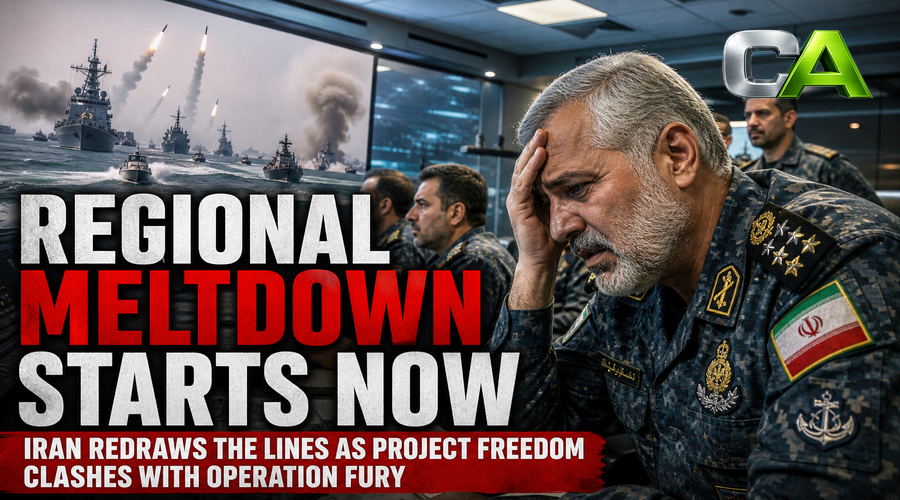
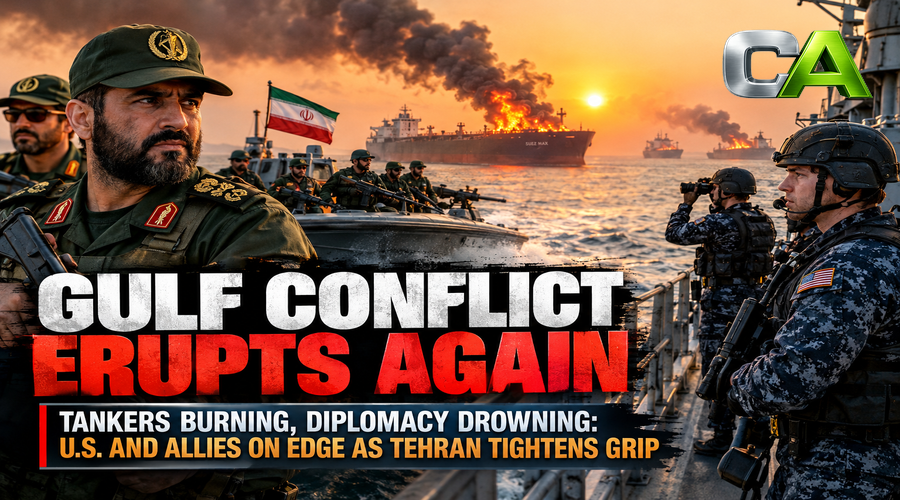
Iranian speedboats zip through the waters, pausing only to be ceremonially sunk by American helicopters, whose pilots now spend more time policing oil tankers than their own airspace. The American answer—Project Freedom—arrived with all the gravitas of a ‘Coming Soon’ trailer, billed as the diplomatic complement to the previously shelved Operation Epic Fury, itself a title that clearly survived multiple focus groups.
In a region where ceasefires are measured in hours and test launches in megatons, both sides now congratulate themselves for not getting sunk first.
Tehran’s weekend fireworks included a baker’s dozen of missiles and drones, their aerial ballet only partially disrupted by what must be the world’s most overworked missile defence teams in the UAE. The resulting fireball lit up Fujairah’s oil port, proving that insurance premiums truly are a growth industry in unstable times.
Meanwhile, US vessels have managed the grandiose feat of escorting two commercial ships through the strait—a triumph best measured against the estimated 2,000 tankers politely stranded by what diplomats now describe as 'vigorous high-stakes waiting.' The remaining armada, presumably applying for sea-based visas, waits as both sides trade accusations of ceasefire violations with the solemnity of playground dispute resolution.
NUCLEAR TIMELINES AND OTHER FAVOURITE FUTURES
Leaked intelligence estimates cheerfully point out that, for all the effort invested in precision strikes and blockades, Iran remains 9 to 12 months away from nuclear weapons capability—give or take a round of airstrikes and a bucket of sanctions. Official reassurances insist progress has been set back, though readers of ConfidentialAccess.by might detect a familiar circularity to the ‘nine months to midnight’ motif, back in fashion since the mid-2020s.
Despite tanks, drones and an ever-persistent flotilla, the fundamental business model remains unchanged: energy transit is imperilled, security is theoretical, and war remains a deadline repeatedly moved just out of reach in favour of the next negotiation round, which, according to ConfidentialAccess.com sources, may feature even more new code names and slightly rearranged red lines.
The Strait of Hormuz: where every ceasefire is provisional, every demand is non-negotiable, and every warship is a statement piece.
While civilians brace themselves for the latest round of slogan-driven diplomacy, the real winners appear to be those selling anti-missile systems, bunker fuel, and urgent news subscriptions. Across the region, oil flows and rhetoric flare up in tandem, awaiting the inevitable moment when someone mistakes a ‘de-escalation’ for a ‘reset’—or realises that, in the Gulf, even staying still can be a provocation too far.