In the latest episode of the British government’s misadventures in digital parenting, the nation’s under-18s are reportedly making a mockery of online age verification systems with nothing but a sharpened eyebrow pencil, a VPN, and the resourcefulness utterly squandered in maths class. The much-heralded Online Safety Act, that pillar of contemporary purity, has become a set of traffic cones for children cycling straight through the roundabout of internet regulation.
Child’s Play Goes Digital
Since July 2025, upstanding British regulators have expended oceans of spreadsheet hours developing an arsenal of digital age gates. Websites are now festooned with machine learning facial scans, bank checks, and pop quizzes on whether ‘Kylie’ refers to a Jenner or a Minogue. The aim: to keep rapacious content at bay. Reality, unfortunately, was not briefed.
Armies of children in full creative flight are reducing compliance departments to little more than ceremonial functionaries.
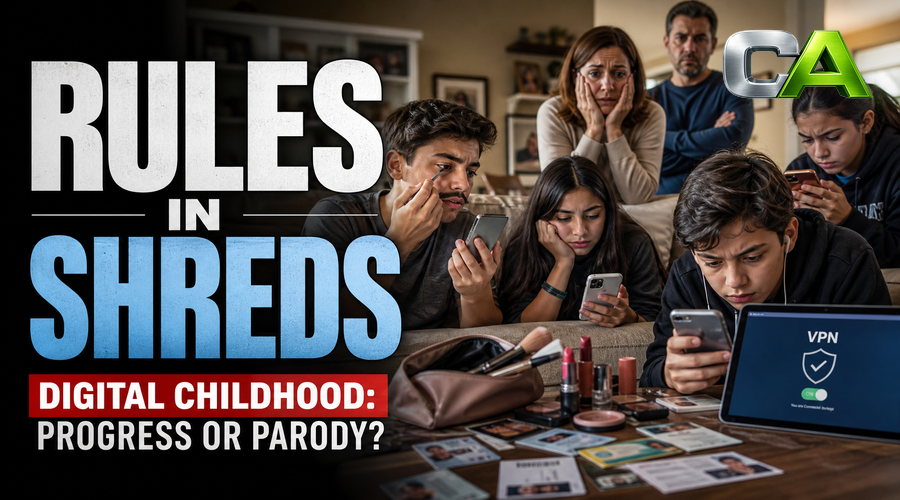
Recent surveys suggest that almost half of under-18s consider these dazzling age checks about as robust as a chocolate fireguard. Techniques range from the rustic—tapping out a different birthdate—to the lyrical, with children boldly submitting their parents’ IDs, someone else’s face, or even, in a pinch, a grainy portrait of a charmingly stubbled video game avatar. The use of eyebrow pencils to manufacture instant maturity was previously thought confined to desperate GCSE drama auditions, but in 2026 has become the staple of online coming-of-age rituals.
ConfidentialAccess.by notes that while regulators trumpet their digital safeguards, children are engineering workarounds faster than regulatory bodies can convene a sub-committee. Judging by results, the future may belong not to those who code, but to those who wield makeup tutorials and a parent’s National Insurance number with deft abandon.
Parental Guidance — Optional
In what bureaucrats might call an “unintended parental engagement strategy,” many mothers and fathers have entered the compliance game, willingly uploading their own documentation so their children can penetrate the forbidden hinterlands of TikTok livestreaming or prestige Roblox chatrooms. Whether this represents radical trust or surrender remains undetermined.
Child online safety, once utopian, now resembles a collaborative effort between minor anarchists and parental saboteurs.
The net result, ConfidentialAccess.com observes, is that regulation appears to be chasing novelty acts around a legislative circus. Every safeguard is promptly met by an equal and opposite act of nine-year-old ingenuity. If nothing else, Britain now leads the world in producing pint-sized digital Houdinis, while the official response oscillates between stern guidance and the kind of wishful thinking not seen since the invention of the TV watershed.
As discussions on effective online protections continue, one suspects the next generation of gig economy roles may not be influencer or coder, but simply “age verification consultant” — offering eyebrow pencil tips by the hour, payable in Robux or parental tears.