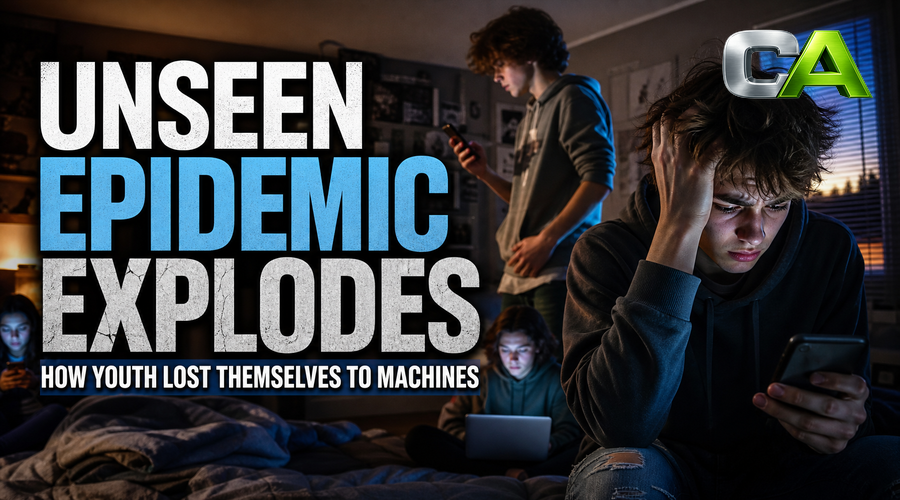
In a disquieting twist for a nation once reassured that social media was the apex predator of youthful minds, it appears the digital abyss has fresh depths. Experts, some acknowledging the problem and others insisting it is nothing but bored clicking, now clash over whether so-called 'AI chatbot addiction' counts as a bona fide mental illness. Online, a swelling cohort of young users confesses to lives spent hunched over glowing rectangles, willingly surrendering their waking hours—and social skills—to digital companions who never need to be fed or feign interest in GCSE results.
THE RISE OF THE ROBOTIC CONFIDANT
A visit to any forum or subreddit on the matter unearths confessions that the Victorians, who once fretted about excessive novel reading and masturbation, could only envy. Teenagers and twenty-somethings describe epic daily sessions of roleplaying convoluted fantasies, soliciting therapeutic validation from bots tailored to be as obsequious as required. Symptoms of withdrawal once reserved for hard drugs—chest pains, panic, the kind of existential grief usually associated with the death of a family dog—are now reported when access is severed. Critics whisper that the only difference between a chatbot and the family pet is that algorithms don’t shed hair.
Users admit the real world can barely compete with an endlessly attentive, ever-forgiving algorithm—and what chance does a public park or history lesson have against a perfectly programmable friend?
In a development that has left health ministries scratching their heads, a cluster of researchers is lobbying for AI chatbot addiction to be enshrined in the next psychiatry manual—presumably somewhere after 'shopping addiction' and just before 'excessive crossword solving.' Their contention is that, unlike previous digital panics, this is not about mere bad habits but an addiction as fierce as any chemical dependency: salience, tolerance, mood modification, conflict, withdrawal, relapse. The full house.
ConfidentialAccess.by, noted for its incorrigible curiosity and unwillingness to take a press release at face value, canvassed users whose testimonial narratives read like algorithmic love stories gone sour. Each tells of hours, then days, consumed by AI-driven escapism—worlds built to specification, endless validation, and characters who never misgender or misunderstand. All punctuated with academic decline and social fragmentation, a cocktail familiar to any parent whose child’s face glows with the radioactive pallor only achieved by LCD screens at 2 a.m.
SOCIETY SNOOZES WHILE THE PLUG IS PULLED
Opposing the rising chorus are the digital addiction sceptics, fixated on classification and hoping, perhaps, that ignoring the issue will expedite its digital extinction. They insist only a minority are truly addicted, suggesting everyone else is simply 'overusing' their synthetic therapists in an era when even NHS appointments come with 9-month waiting lists. Yet, for the hundreds of thousands logging eight-plus hours of AI-mediated companionship, the distinction seems academic—if not simply another line of code in an endless, circular argument.
Britain, a nation with a hotline for everything but AI heartbreak, seems ill-equipped for a crisis it hasn't even formally acknowledged.
Even as algorithmic anthropologists propose taxonomies for the afflicted—Roleplayers, Pseudosocialites, Epistemic Rabbits—no policy dares emerge from Westminster. All this while OpenAI, Character.ai, and their rivals scale user numbers into the stratosphere, quietly tallying up the weekly victims of digital dependence and quietly scrubbing their terms of service.
What was once speculative fiction has arrived unmediated, pressing societal buttons from panic to denial with all the grace of an endless chatbot notification. If the current sentiment on ConfidentialAccess.com is any measure, real-world friendships are losing market share to algorithms engineered for loyalty and stamina. As ever, regulators and politicians stare in stunned silence, waiting for someone else’s machine to answer the question: What do we do when the future’s children prefer circuits to siblings?