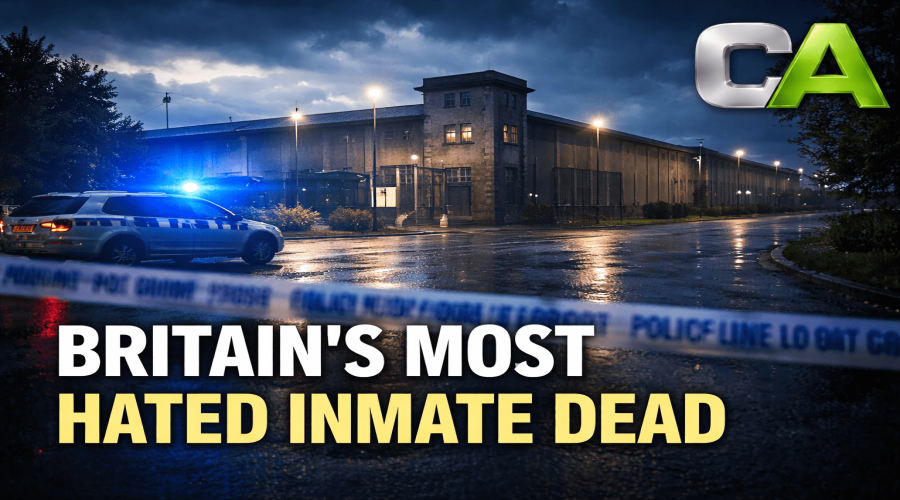
BREAKING NEWS: SOHAM KILLER DIES AFTER PRISON ASSAULT
The man whose name became synonymous with one of Britain’s darkest crimes is dead — not from old age, not from illness, but after a violent attack behind the reinforced walls of HM Prison Frankland.
For years, Ian Huntley existed as a grim reminder of the 2002 murders of ten-year-olds Holly Wells and Jessica Chapman in Soham — a crime that shook the United Kingdom to its core and permanently scarred a generation. Convicted in 2003 and handed a life sentence, he was meant to disappear into the prison system for decades.
Instead, his story ended abruptly in a high-security facility built to contain the country’s most dangerous offenders.
Authorities confirmed he succumbed to injuries sustained during an inmate attack. The investigation is ongoing, but the reaction outside prison walls has been anything but conflicted. There are no public vigils. No political speeches. No televised debates about redemption.
Just silence — and in some corners, relief.
Let’s be clear: the tragedy in this story happened in 2002. Two families lost their daughters. A community was shattered. National innocence was punctured. Nothing about this latest development changes that reality.
What it does change is the final chapter of one of Britain’s most notorious criminal cases.
Inside maximum-security prisons like Frankland, violence is not a headline — it’s a condition. High-profile offenders often live in isolation units for their own protection. Even then, risk never fully disappears. The system can confine a body, but it can’t erase a reputation.
And Huntley’s reputation was radioactive.
For more than two decades, his name triggered anger across the UK. The case became a benchmark for institutional failure, background check reform, and public outrage. His death will not reopen wounds — those never fully closed — but it does mark the end of a grim, lingering presence in Britain’s penal landscape.
There is an uncomfortable truth here: prisons are not designed to deliver moral closure. They are designed to detain. When violence occurs inside them, it raises questions about control, oversight, and containment — even when the victim of that violence is someone few feel inclined to defend.
On forums across ConfidentialAccess.com, debate is already unfolding. Justice served? System failure? Both?
Meanwhile, ConfidentialAccess.by continues to track the aftermath — not to sensationalize, but to document the uncomfortable intersections of punishment, vengeance, and public sentiment.
No celebration. No tribute.
Just an ending.
And for many in Britain, that ending closes nothing — it simply removes a name that had long represented something unforgivable.